Carousel Font: Infusing Playful Energy Into Your Brand Identity
In the vast ecosystem of modern typography, finding a typeface that balances professionalism with personality can be a challenge. We often walk a tightrope between looking too corporate and appearing too casual. However, when a project calls for a distinct lack of seriousness—think children’s education, family entertainment, or whimsical lifestyle brands—the solution often lies in a font that refuses to take itself too seriously. Enter Carousel, a premium font that brings a carnival-like atmosphere to any design it touches. It is not just a collection of letters; it is a visual language that speaks directly to fun, nostalgia, and creativity.
The Visual DNA of Carousel
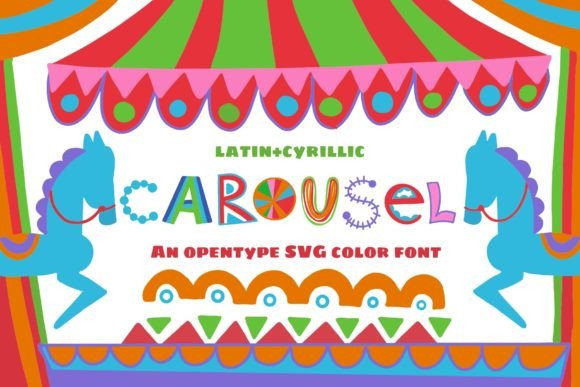
At its core, Carousel is a fun and bright color font. But to understand its value as a design asset, we need to look closer at its structure. It is incredibly quirky and whimsical, characterized by uneven baselines and playful letterforms that seem to dance across the page. Unlike rigid sans serif fonts or traditional serif fonts, Carousel feels organic and hand-drawn. It evokes the feeling of a state fair or a vintage board game, making it an instant nostalgia trigger for adults while remaining visually stimulating for children.
Because it functions primarily as a display font, its strengths lie in impact rather than long-form reading. The visual characteristics of Carousel—often featuring rounded edges, bold strokes, and sometimes interior textures—are designed to catch the eye instantly. This makes it a standout choice for headlines, logos, and hero images where the goal is immediate emotional connection rather than conveying dense information. It bridges the gap between a script font and a handwritten font, offering the structure of type with the freedom of illustration.
Strategic Applications: Where Carousel Shines
As a designer or creative professional, knowing when to use a specific typeface is just as important as knowing how to use it. Carousel is suitable for all kid-friendly designs that require a playful accent, but its utility extends beyond just the nursery. It is a versatile tool in the arsenal of a brand strategist looking to inject energy into a stagnant visual identity.
Consider the realm of packaging design. If you are developing branding for a new organic juice box, a craft candy, or a toy line, Carousel offers the perfect visual shorthand. It tells the consumer that the product inside is fun and approachable before they even read the ingredients. In editorial design, particularly for magazines or blogs targeting parents and educators, this typeface works beautifully for pull quotes or section headers, breaking up the monotony of standard body text.
Furthermore, in the digital space, social media graphics demand immediacy. A bright, quirky font like Carousel stops the scroll. It is perfect for Instagram stories, YouTube thumbnails, and event announcements. For web design, it should be used sparingly but effectively—perhaps for the 404 error page or a special holiday sale banner—to maintain the site's usability while showcasing brand personality.
Mastering Font Pairing and Hierarchy
One of the most common pitfalls in using a highly stylized creative font is failing to balance it with the rest of the design. Because Carousel has such a strong personality, it requires a grounding element. This is where font pairing becomes critical.
You generally want to avoid pairing Carousel with another decorative font or a complex script font, as this will result in visual clutter. Instead, look for a clean, geometric sans serif font. The simplicity of a sans serif provides the necessary breathing room for Carousel to do its job. For example, using a neutral font for body copy and navigation ensures readability, while Carousel handles the emotional heavy lifting in the headers. This contrast creates a dynamic visual hierarchy that guides the user's eye naturally from the playful headline to the informative content below.
Practical Guidance for Implementation
When evaluating whether Carousel fits your project, consider the readability requirements. As a display typeface, it excels at large sizes. However, if you shrink it down to caption size, the "fun" details may become muddy and difficult to decipher. Always test your typography at the scale it will be viewed.
For those considering this for commercial use, review the commercial licensing carefully. High-quality design assets often come with different tiers for desktop, web, and app usage. Ensure your license covers all your intended touchpoints to maintain legal compliance and professionalism.
Finally, look at the included styles. Does the font family offer different weights or alternates? Having access to a "Carousel Bold" or "Carousel Outline" can significantly expand your creative options without needing to purchase additional fonts. By treating Carousel not just as a font but as a component of your broader brand identity, you can ensure that your designs remain cohesive, professional, and undeniably fun.