Embrace the Warmth of the Coconut Summer Typeface
There is a distinct feeling that comes with the arrival of summer—a sense of ease, warmth, and uncomplicated joy. Capturing that feeling in design work is often difficult, but the Coconut Summer typeface manages to do exactly that. It is a creative font that feels less like a digital tool and more like a handcrafted artifact. For designers and creators who want to inject personality into their work without sacrificing quality, this premium font offers a beautiful solution. It moves beyond the rigid structures of standard sans serif font families to deliver something with genuine soul.
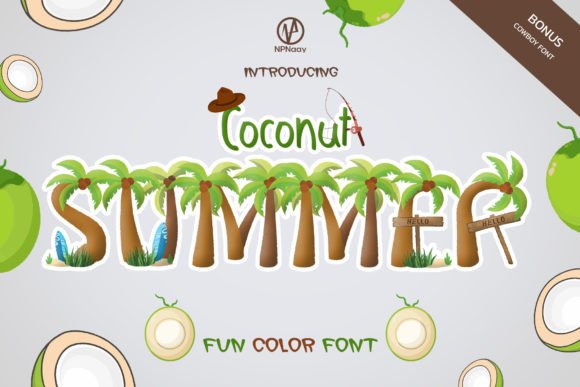
The visual characteristics of Coconut Summer are defined by its authentic, hand-lettered aesthetic. It is not a stiff, perfect script font; instead, it possesses the charming irregularities of real handwriting. You will notice subtle variations in the baseline and a natural flow that mimics the movement of a pen on paper. This approach to modern typography creates an immediate connection with the viewer, evoking nostalgia and a sense of the personal. It feels tropical and breezy, yet it retains a level of sophistication that prevents it from looking childish. The weight of the strokes is balanced—bold enough to stand out as a display font, yet delicate enough to maintain legibility in shorter paragraphs.
Integrating This Display Font into Brand Identity
When building a brand identity, the typeface you choose is the voice of your visual language. Coconut Summer speaks a language of approachability and warmth. It is an excellent choice for businesses that want to position themselves as friendly, organic, or artisanal. Think about a boutique hotel, a skincare line using natural ingredients, or a neighborhood coffee shop. Using this font in their logo design instantly communicates a relaxed atmosphere. It tells the customer that the brand values authenticity over corporate sterility.
However, the application of this typeface goes far beyond a logo. It is a powerful asset in packaging design, particularly for products that rely on a "farm-to-table" or "craft" aesthetic. Imagine this font on a label for organic honey or a summer beverage. The handwritten feel reinforces the product's origin story. In the digital space, web designers can use Coconut Summer for hero section headers or call-to-action buttons to break the monotony of standard web-safe fonts. It adds a layer of texture to the user interface that makes the browsing experience feel more curated and less automated.
Practical Applications for Print and Stationery
While digital applications are vast, the true charm of Coconut Summer shines in print, particularly in the realm of stationery. For graphic designers working on wedding invitations, this font is a standout choice. It offers the elegance of traditional calligraphy with a modern, casual twist. It pairs beautifully with clean serif font choices or minimalist sans serif font styles, allowing for a balanced typographic hierarchy. The headline draws the eye with its whimsical flair, while the body text remains grounded and readable.
Beyond weddings, this typeface is perfect for greeting cards, postcards, and editorial design layouts that require a personal touch. Publishers creating lifestyle magazines or recipe books can use it for pull quotes or chapter headings to create a sense of intimacy with the reader. It works exceptionally well in "flat lay" photography where the text is part of the visual composition. Because it is a high-quality premium font, it scales well, ensuring that the edges remain crisp whether you are printing a small business card or a large-format poster.
Mastering Font Pairing and Visual Hierarchy
One of the most common questions regarding display fonts is how to pair them effectively. Because Coconut Summer has such a distinct personality, it requires a supportive cast. You generally want to avoid pairing it with other decorative or overly stylized fonts, as this will create visual chaos. Instead, let it take center stage as the primary accent font.
A classic and effective strategy is to pair Coconut Summer with a geometric sans serif font. The clean, straight lines of the sans serif provide a necessary counterpoint to the organic curves of the script. For example, using a font like Montserrat or Lato for body text allows the headers to pop without overwhelming the page. Alternatively, for a more sophisticated or editorial look, try pairing it with a modern serif font. The contrast between the traditional, structured serif and the casual, handwritten script creates a dynamic tension that feels very contemporary. This interplay is essential for establishing visual hierarchy, guiding the reader's eye from the most expressive elements down to the informational content.
Technical Considerations and Readability
As an experienced designer, I always advise caution with script and handwritten fonts regarding readability. While Coconut Summer is designed with legibility in mind, it is still a display font. It is not intended for long blocks of body copy. If you use it for paragraphs, you risk causing eye strain for your audience. Instead, use it strategically for headlines, sub-headers, logos, or short phrases where impact is more important than reading speed.
When testing this font for your specific project, pay attention to the kerning and tracking. Hand-lettered fonts often require manual adjustment depending on the letters adjacent to one another to ensure they look naturally spaced rather than digitally glued together. Additionally, consider the background contrast. Because the strokes are organic, placing the text over a busy, high-contrast image can make it disappear. A solid color background or a blurred image usually provides the best canvas for Coconut Summer to be fully appreciated.
Commercial Use and Licensing
For entrepreneurs and content creators, the distinction between personal and commercial use is critical. Coconut Summer is a commercial font, meaning you need to ensure you have the proper license if you are using it for business purposes. This includes using it on merchandise you sell, in client work, or for marketing materials that generate revenue.
Investing in a premium font license does more than keep you legally compliant; it supports the type designers who pour hours into crafting these assets. Furthermore, premium fonts often come with better support, more comprehensive character sets (including kerning pairs and alternates), and more reliable file formats than free alternatives. When you purchase a license for Coconut Summer, you are buying a design asset that elevates the perceived value of your own work. It is an investment in the professionalism of your brand.
Ultimately, Coconut Summer is more than just a collection of vectors and curves. It is a versatile design tool that bridges the gap between casual fun and professional quality. Whether you are designing a social media campaign, creating physical stationery, or refreshing a brand identity, this typeface offers a refreshing escape from the mundane. It brings the heat of the tropics and the coolness of a handwritten note to any screen or page, making it a valuable addition to any designer's toolkit. By understanding its strengths and applying it with intention, you can transform a standard layout into something truly memorable.